


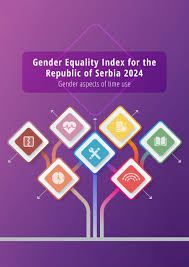
New Gender Equality Index for the Republic of Serbia is now available
New Gender Equality Index for the Republic of Serbia is now available The new report, “Gender Equality Index for the Republic of Serbia 2024 —
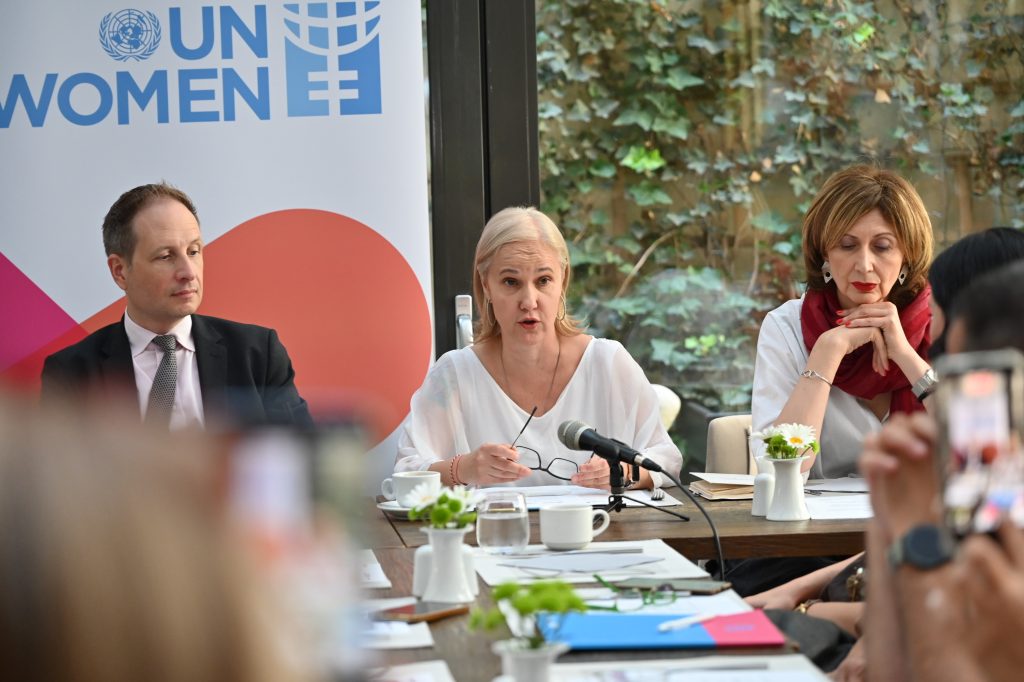
Research Findings on Out-of-Pocket Care Expenditures of Households in Serbia Presented
On 19 June 2026, UN Women organized a media breakfast as part of the TransformCare initiative to present the findings of the research “Out-of-Pocket Household
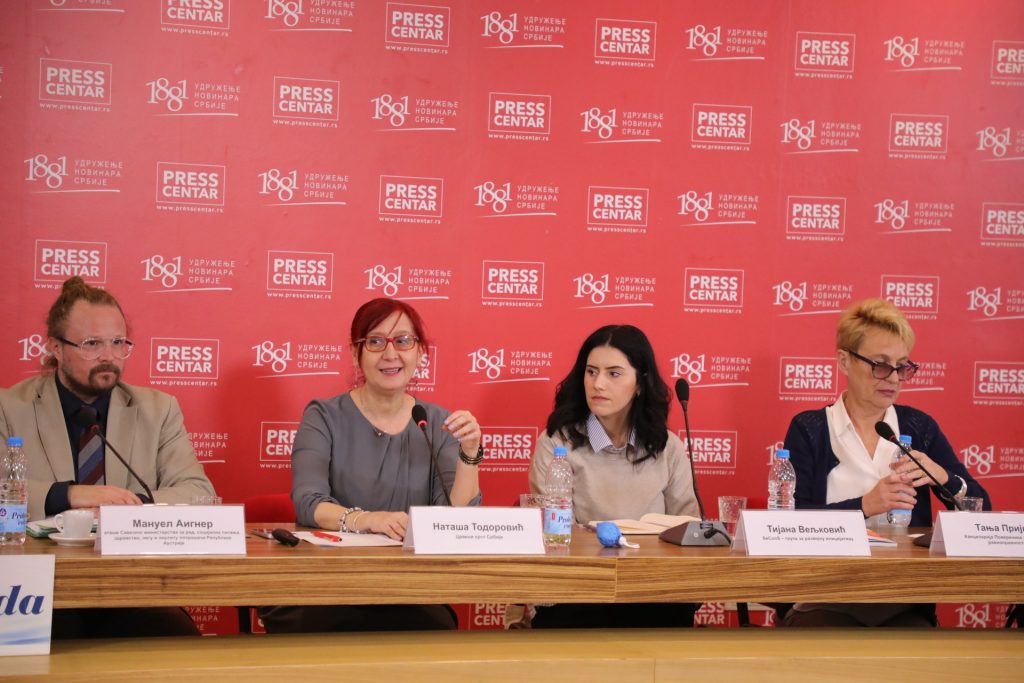
Financial Pressure on Older People: New Data on Long-Term Care Costs in Serbia
Results of a study examining the impact of long-term care costs on the risk of poverty among people aged 65 and over in Serbia were
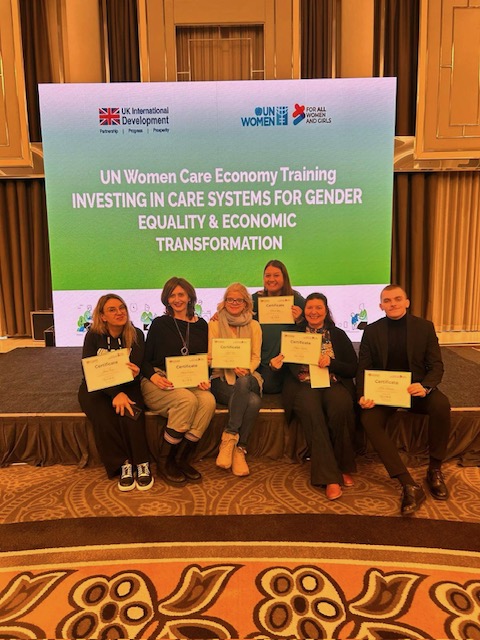
Regional Training on the Care Economy Strengthens Policy Capacities in the Western Balkans
From 18 to 20 February 2026, a Regional Training on the Care Economy was held in Istanbul, organized by the UN Women Regional Office for

Award Ceremony within the Climate Change Resilience and Irrigation Project in Serbia
On 18 November, an award ceremony was held at Hotel Tamiš in Pančevo following a completed call for the selection of good practice examples demonstrating
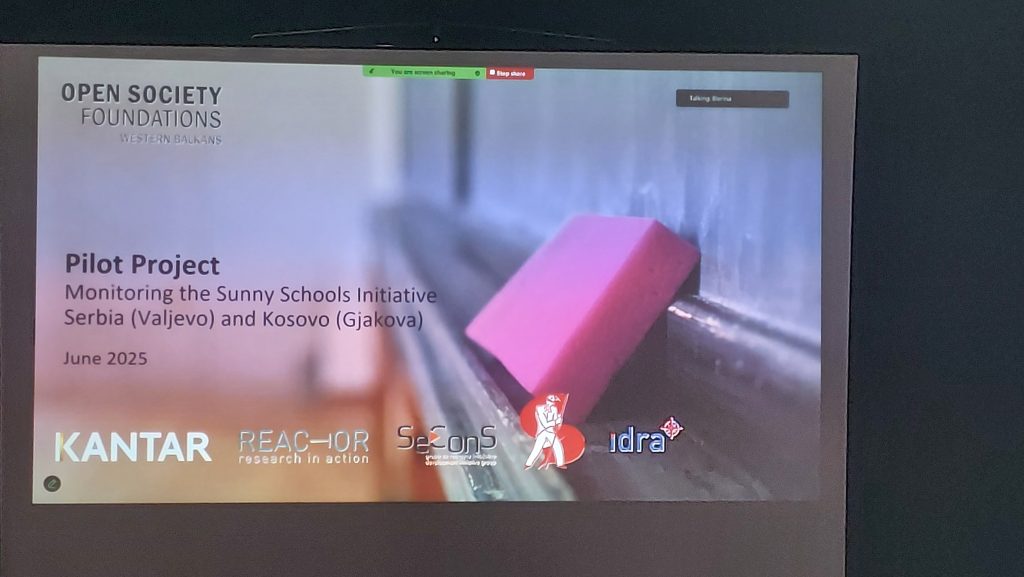
Workshop within the Just Green Transition project – Phase 2
As part of the second phase of the Just Green Transition project, which is being implemented with the support of the Foundation for an Open
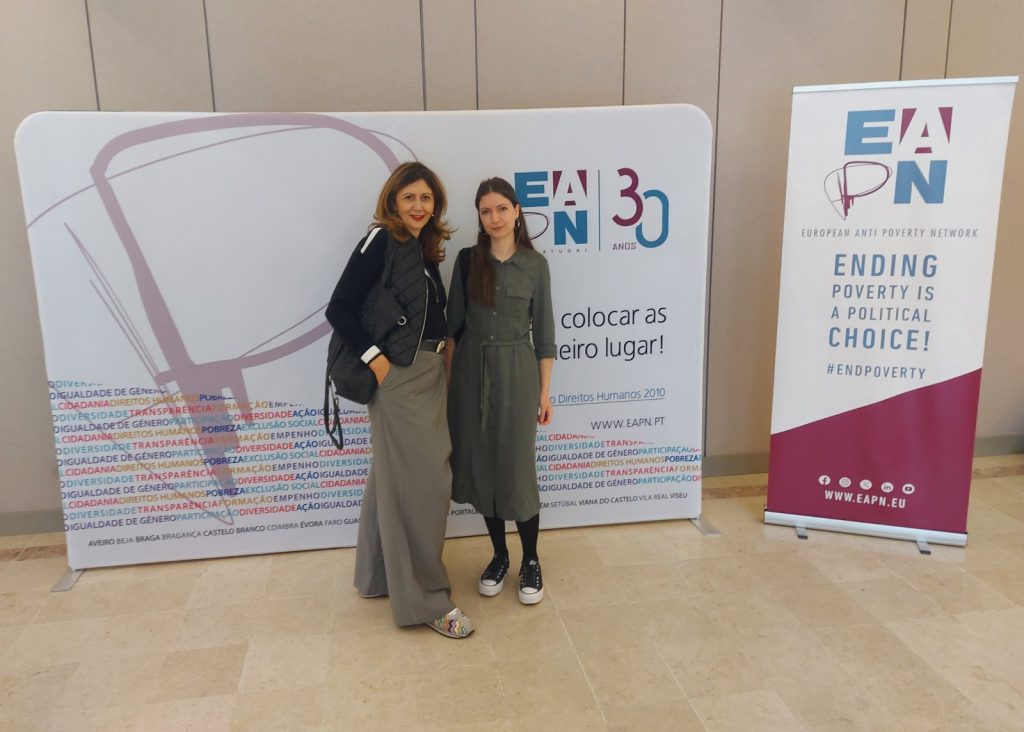
EAPN Serbia at People’s Summit 2025 in Porto
SeConS representatives from EAPN Serbia participated in the People’s Summit 2025—Porto Edition, held on March 28 in Portugal. The summit, jointly organized by the European Anti-Poverty Network (EAPN) and EAPN Portugal, brought together participants from across Europe—people living in poverty, representatives of civil society organizations, decision-makers, and institutions at national and European levels.
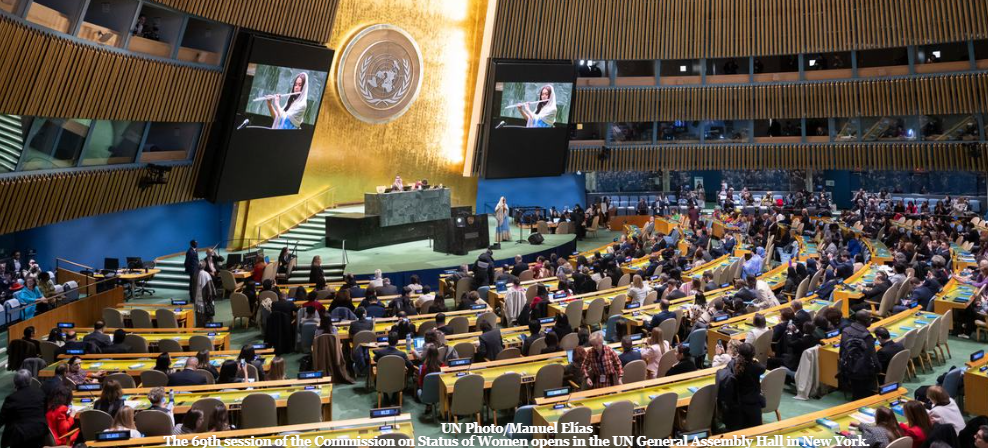
Prof. Marija Babović, PhD, participated in an interactive dialogue at the 69th United Nations Commission on the Status of Women in New York
Prof. Marija Babović, PhD, Director of Programs at the SeConS Development Initiative Group, participated as a panelist in the interactive dialogue at the 69th session of the United Nations Commission on the Status of Women in New York. The dialogue centered on “Inclusive Development, Shared Prosperity, and Dignified Work”, where participants engaged in discussions about innovative strategies for gender-inclusive economic policies, national care systems, and the effects of digitization and artificial intelligence on women’s employment and the digital gender gap.


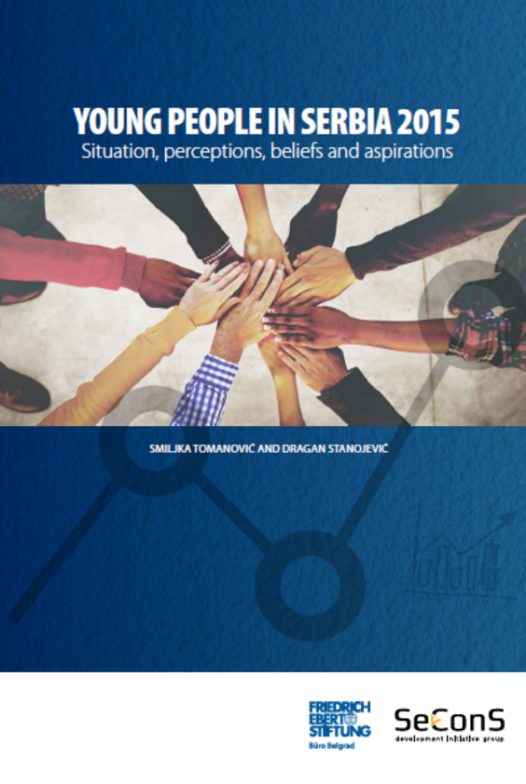 Young people in Serbia 2015
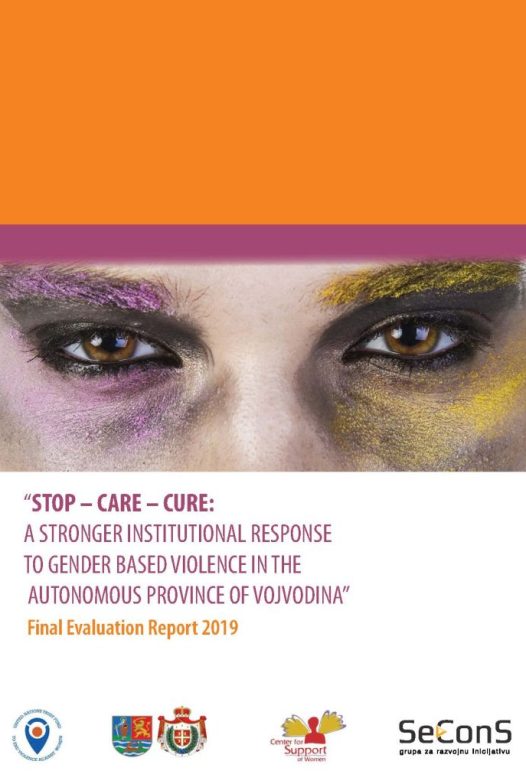 Monitoring and evaluation of the project “STOP CARE CURE: a stronger institutional response to gender based violence in AP Vojvodina”
 Study on Selected Transport Service Providers
 Evaluation of the National Action Plan for the Implementation of the National Strategy for Improving the Position of Women and Promoting Gender Equality in the Republic of Serbia
 Population Situation Analysis in Bosnia and Herzegovina
 Social Inclusion at the Local Level
 Migration Flows in Western Balkan Countries: Transit, Origin and Destination, 2009-2013
 Human Security in Serbia
 Analysis and Roadmap for Adequate and Accessible Minimum Income Scheme in Serbia
 Economic Impact of Social Enterprises in the Republic of Serbia
 How laws are made in Serbia: The role of social interests and institutions in the legislative process
 Humanizing Security – Two Human Security Case Studies in Serbia
 Mapping of Social Enterprises in Serbia
 The Status of Women in the Business Sector in Serbia
 Access to Justice and Free Legal Aid in Serbia
 Informal power networks, political patronage and clientelism in Serbia and Kosovo
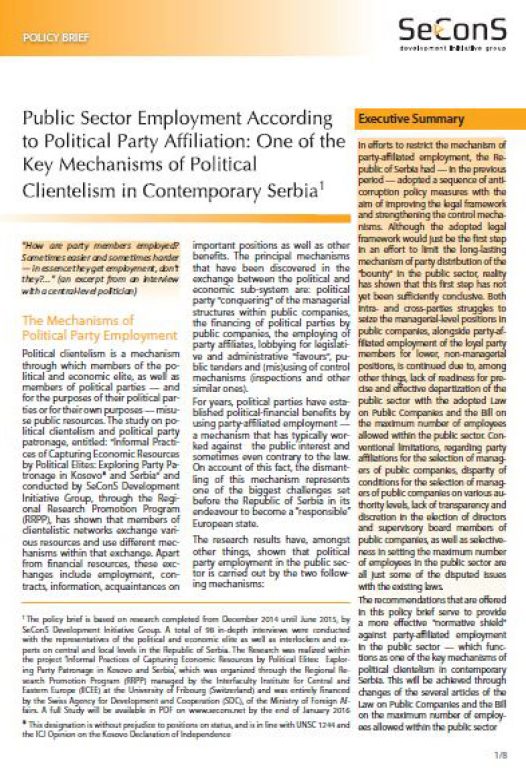 Public Sector Employment According to Political Party Affiliation: One of the Key Mechanisms of Political Clientelism in Contemporary Serbia
 Briefing on Party Patronage and Clientelism in Serbia
 Social Exclusion in Rural Areas of Serbia
 Gender Economic Inequalities in a Comparative Perspective: European Union and Serbia
 Actors in the Social Inclusion Process. Action Research Report
 Access for Women and Children to Services in Rural Areas of Serbia and Proposed Measures to Improve Their Situation
 Sustainable tourism as a rural development factor
 Challenges of new social policy: social inclusion in EU and Serbia
 Situation of Young People with Disabilities in the Labour Market in the City of Belgrade
 Gender Inequalities in Republika Srpska from the perspective of life courses
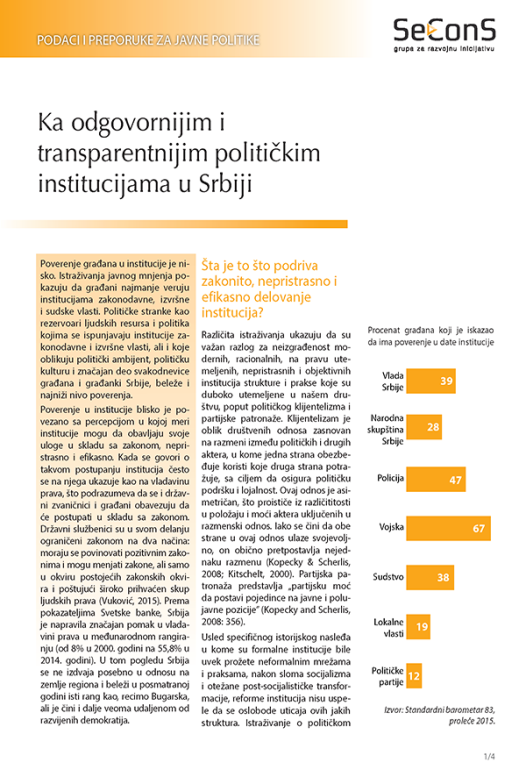 Towards transparent and accountable political institutions in Serbia
 Towards efficient mechanisms for the protection of children from violence
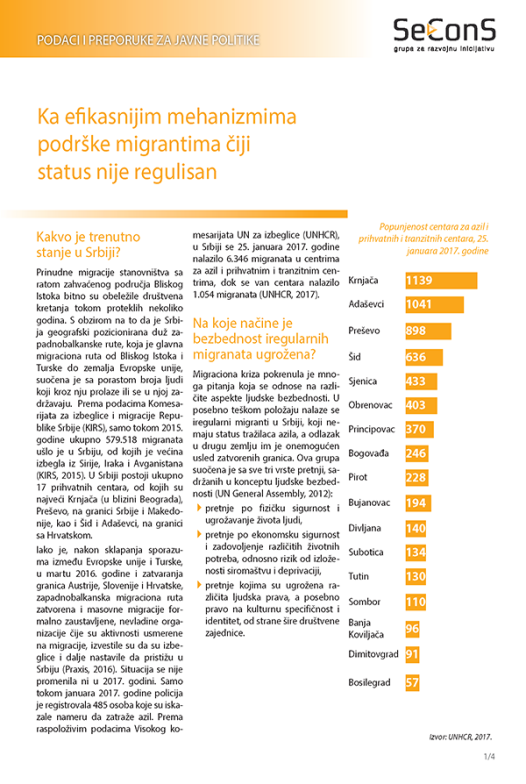 Towards more efficient mechanisms for support migrants whose status is not regulated
 Sources of Insecurities in Western Balkans and Turkey: Human Security Barometer 2016
 Are Institutions Providing Human Security? Trust in Public Institutions Across the Balkans and Turkey
 Towards transparent and accountable institutions: suppressing clientelism and improving citizens’ trust in institutions
 Violence against children in Serbia: Determinants, factors and interventions
 Determinants and factors of violence affecting children in Serbia: a snapshot of findings
 Intersectoral collaboration with regard to protection of children from abuse and neglect at the local level: analysis of local protocols
 The Role of Community Development and Citizen Engagement Activities in Strengthening Civic Engagement and Government Responsiveness in Serbia
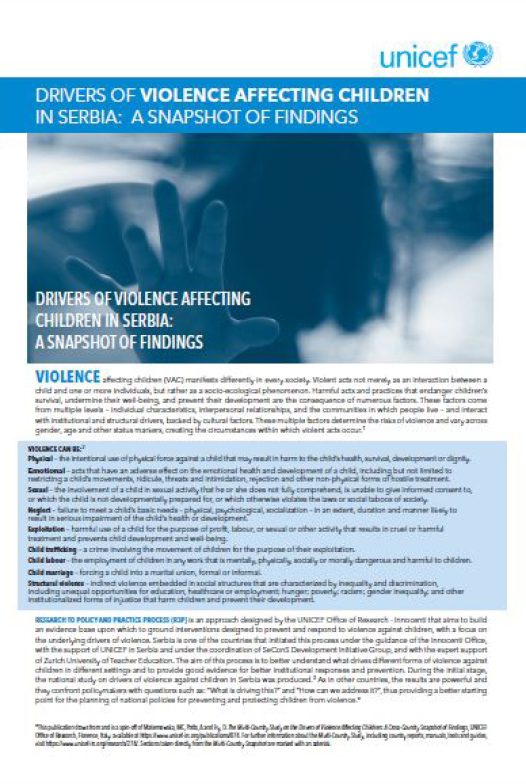 Drivers of Violence Affecting Children in Serbia: A Snapshot of Findings
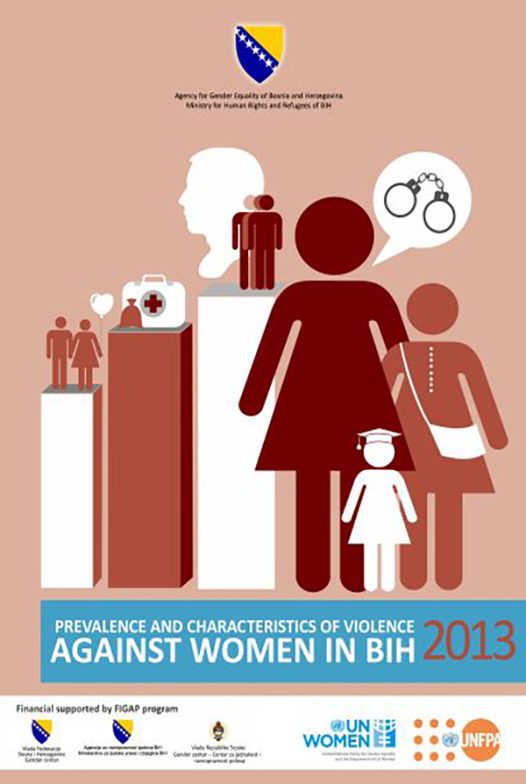 Prevalence characteristics of violence against women in BIH
 Public Policy Framework for the Implementation of the UN Sustainable Development Goals After 2015 – the Role of the Government of Serbia Ministries and specific Independent State Bodies
 Young People in Serbia 2015. Situation, Perceptions, Beliefs and Aspirations: Briefing
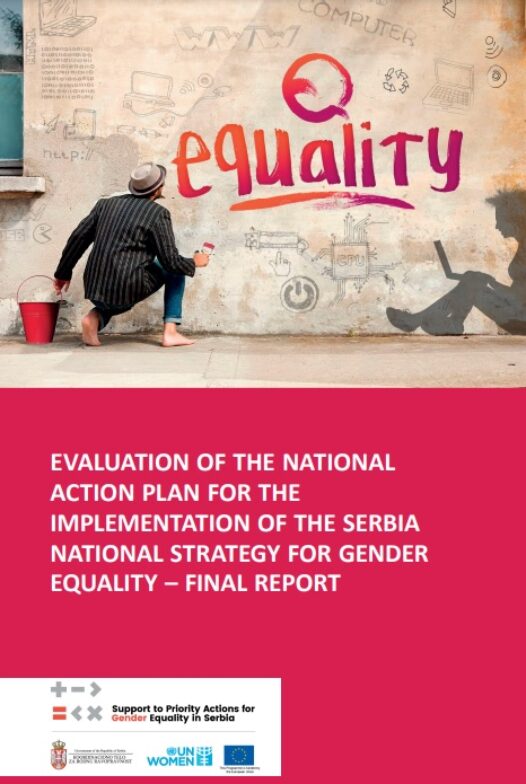 Evaluation of the National Action Plan for the implementation of the Serbia National Strategy for Gender Equality
 Care economy during the COVID-19 pandemic and measures for its prevention in Serbia
 Impact of the COVID-19 pandemic and measures for its prevention on women entrepreneurs in Serbia
 Impact of COVID-19 pandemic and measures for its prevention on the socio-economic position of rural women, with the focus on agriculture
 Consequences of COVID-19 on women’s and men’s economic empowerment
 Evaluation of Models for Scale-up Potential in Serbia 2016-2020
 National gender profile of agriculture and rural livelihoods – Serbia
 Comparative Analysis of the Role of Civil Society in Providing Social Care Services in the Western Balkans
 Impact of COVID-19 pandemic and measures for its prevention on employment and working conditions of women and men in Serbia
 Gender Equality in Transport in Serbia
 Gender Equality index for Serbia 2021
 Covid crisis and poverty – Poverty Watch Serbia 2021
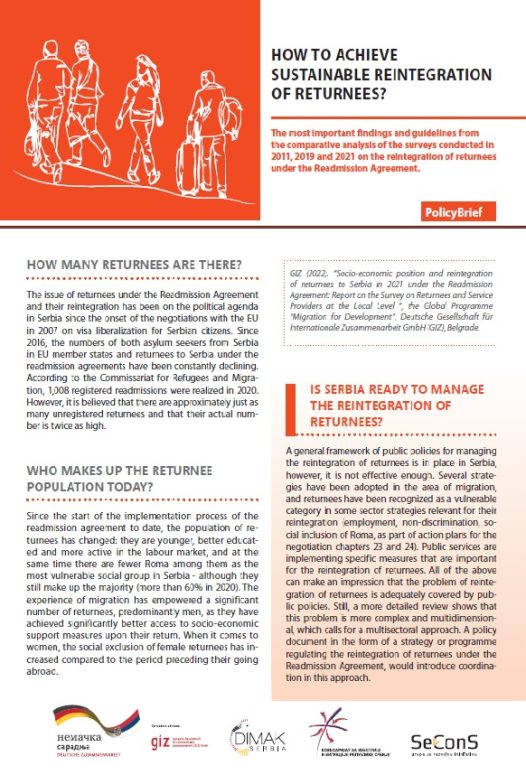 How to achieve sustainable reintegration of returnees – Policy brief
 Socio-economic position and reintegration of returnees under the readmission agreement in Serbia in 2021
 Human trafficking in Serbia – an overview of the situation in the context of the 21st century
 Long-term care of older persons and persons with disabilities in the Western Balkans – regional study
 Long-term care of older persons and persons with disabilities in the Western Balkans – summary
 Women’s Entrepreneurship in Serbia – 10 years later
 Women’s Entrepreneurship – 10 years later: support programmes for women enterpreneurs in Serbia
 Women’s Entrepreneurship in Serbia – 10 years later: COVID 19 and women’s enterpreneurship
 Women’s Entrepreneurship in Serbia – 10 years later: climate change and women’s enterpreneurship
 Women’s Entrepreneurship in Serbia – 10 years later: profile of women enterpreneurs
 Poverty watch Serbia 2023: Re-investing in social welfare, putting people and the planet at the centre
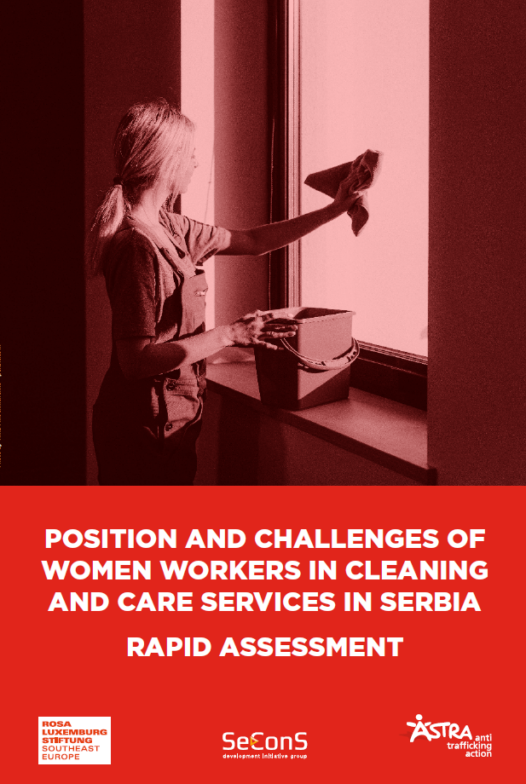 Position and challenges of women workers in cleaning and care services in Serbia – rapid assessment
 Research on the effects of the COVID-19 pandemic on the youth population in Serbia
 Access to rights and services in rural areas in Serbia
 Strengthening the capacities of agricultural advisory and professional services for gender-responsive service delivery including training on efficient irrigation technologies – baseline report
 Strengthening the capacities of agricultural advisory and professional services for gender-responsive service delivery including training on efficient irrigation technologies – service provider needs assessment report
 Access to rights and services in rural areas in Serbia – overview
 Report on the Position of Women and Employers in the Labor Market of the Jablanica and Pčinja Districts
 Poverty watch Serbia 2024: Toward a systemic approach to social protection
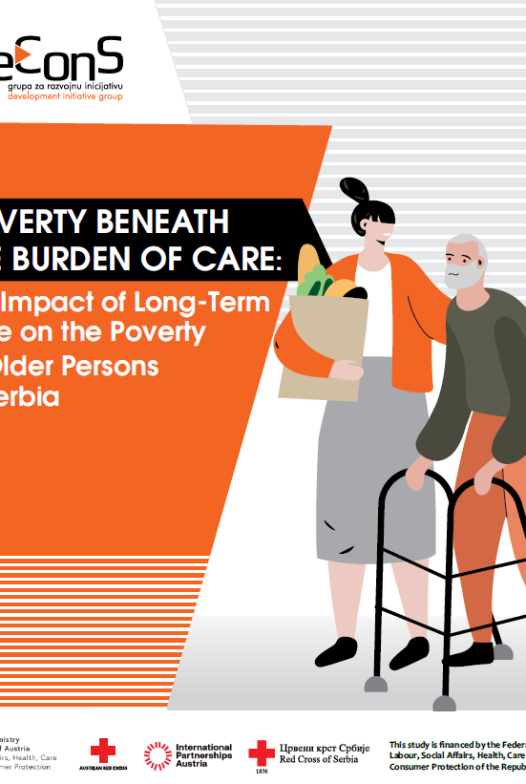 Poverty Beneath the Burden of Care – Study
 SCHOOL VIOLENCE AND STUDENT WELL-BEING IN SERBIA
 SCHOOL VIOLENCE AND STUDENT WELL-BEING IN SERBIA
 Rodna analiza mera energetske efikasnosti
 Gender Analysis of energy efficiency measures in Serbia